Customization Over Convention in
Today’s Bathroom Design
Bathrooms used to follow a predictable script, and no one questioned it. A vanity pressed against one
wall, a shower tucked into a corner, tile chosen in a safe neutral tone, and lighting that was functional
but forgettable. It worked, technically. It checked the boxes. Yet it rarely felt memorable. The room
existed to serve a purpose, not to express anything about the person using it.
This predictability is fading. Homeowners are no longer accepting default layouts as final answers. They
are stepping back and asking bigger questions. Why does the vanity have to sit there? Why should the
shower hide in a corner? Why does the palette have to stay beige? Bathrooms are being reconsidered as
lived-in spaces rather than technical necessities. Instead of copying showroom displays, people are
shaping the room around how they actually move, pause, and unwind within it.
Lifestyle Mapping First
Before tile samples hit the table or fixture finishes are debated, customization starts with honest
evaluation. How does the bathroom function in real life? Does the homeowner spend ten minutes
getting ready or forty-five? Are countertops cluttered because storage is lacking or because the layout
forces it? Does natural light play a role in the morning routine, or does softer illumination matter more
at night? These questions guide smarter decisions than any trending material ever could. This stage often benefits from collaboration with custom bathroom remodeling experts who understand how to translate habit into form. Their role is not to impose a dramatic aesthetic shift. It is to refine circulation paths, rework proportions, and rethink placement based on actual use. Maybe the vanity needs to extend to accommodate daily essentials. Maybe the shower entry should shift to improve flow. When design begins with routine rather than surface choices, the outcome feels natural instead of forced.
Shower Repositioned
The once-standard corner shower is losing its automatic status. Placement is becoming strategic. Some
layouts move the shower toward a window to take advantage of natural light. Others position it along a
longer wall to create a more expansive entry. In some cases, it becomes the focal point rather than the
afterthought. Repositioning changes how the entire space reads. A long, linear shower entry creates openness and visual stretch. A side-entry configuration introduces privacy while maintaining clean sightlines. Ceiling height also plays a role, with taller shower areas designed to feel airy rather than boxed in. Instead of inheriting a layout from past blueprints, homeowners are placing the shower where it makes sense for how they live.
Tile With Character
Tile has moved beyond background duty. It is no longer simply a protective surface. Homeowners are
treating it as a language. Vertical stacking creates height. Oversized slabs introduce calm through
reduced grout lines. Tonal grout adds quiet contrast. Asymmetrical compositions introduce movement
without clutter. Scale influences mood. Large-format tile can quiet a room and create continuity across surfaces. Smaller tiles arranged intentionally bring rhythm and texture. Patterns are selected for effect rather than tradition. The shift away from predictable grids allows individuality to show through without
overwhelming the room. Tile becomes expressive but controlled, supporting the overall design instead
of dominating it.
Ritual-Focused Showers
Shower design is increasingly centered on personal habits rather than standard fixture placement.
Controls are positioned where they can be reached before stepping fully inside. Niches are built at heights that align with actual product use. Benches are integrated based on comfort rather than symmetry. Some homeowners incorporate dual shower heads for flexibility. Others focus on steam features or
rainfall fixtures that transform the experience into something restorative. Entry width and glass
placement are adjusted for ease. Every detail supports pacing and routine.
Mirror Reimagined
The traditional rectangular mirror mounted directly above the vanity is no longer the only choice. Shapes are expanding. Arched frames introduce softness. Vertical panels stretch height. Custom silhouettes create distinction without excess. Placement has become more deliberate. Dual mirrors can reinforce symmetry for shared spaces. Oversized panels amplify light and widen visual perspective. Height adjustments respond to user comfort rather than fixed standards. The mirror becomes integrated into the design conversation, as it supports proportion and balance instead of simply filling space above a sink.
Working With Quirks
Older homes and even newer builds often come with architectural irregularities. Sloped ceilings, unexpected alcoves, narrow footprints, or offset plumbing walls used to be treated as problems to hide. Now they are being approached as opportunities to define the room’s character. A slanted ceiling might become the perfect place for custom shelving that follows the angle rather than fighting it. An awkward niche can transform into recessed storage with built-in lighting. Narrow bathrooms are embracing elongated vanities and linear layouts instead of trying to force symmetry. Instead of flattening every space into a predictable box, homeowners are allowing quirks to inform the design.
Open Shelving with Purpose
Open shelving has evolved from decorative filler into a calculated design decision. Rather than scattering
random items across exposed surfaces, homeowners are curating what remains visible. Rolled towels,
ceramic containers, neatly arranged skincare, or a single sculptural object can add dimension without
clutter.
Placement matters as much as content. Shelves positioned within recessed niches feel integrated rather
than tacked on. Floating shelves flanking a vanity can balance proportions while offering easy access.
Color Beyond Neutral
Neutral palettes once dominated bathrooms under the assumption that safety equaled longevity. That
thinking is loosening. Saturated tones, layered hues, and textured finishes are gaining traction because
they introduce depth without chaos.
A deep green vanity can anchor the space without overwhelming it. Muted terracotta tile can warm up
natural light. Tonal plaster walls can create softness that traditional paint cannot replicate. The move
away from automatic beige signals confidence. Color becomes expressive rather than risky, especially
when it aligns with the homeowner’s broader aesthetic preferences.
Tub Placement as a Statement
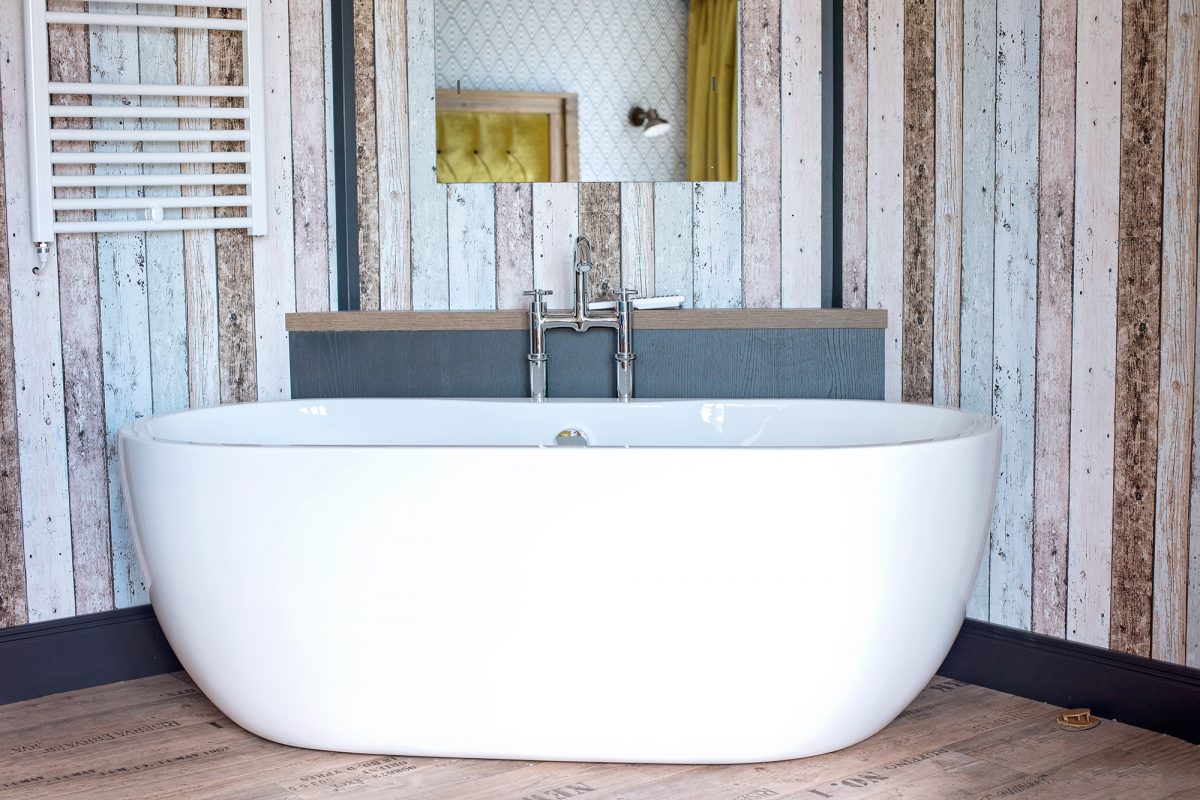
Freestanding tubs are no longer defaulted against the nearest open wall. Their placement is being reconsidered based on sightlines, symmetry, and spatial balance. Centering a tub beneath a window can
create a strong focal point. Positioning it beneath a light fixture can emphasize its sculptural quality.
The tub becomes more than a functional element, as it shapes how the bathroom is experienced upon
entry. Its location influences circulation and proportion.
Bathroom design is no longer confined to templates. The once predictable formula has given way to spaces that respond to real routines and aesthetic instincts. Customization does not require extravagance. It requires attention. When proportions are refined, quirks are embraced, and choices reflect how someone actually lives, the bathroom stops feeling like a standard feature and starts feeling personal.